Return-to-Golf Guide ยท Columbus, GA
For golfers dealing with medial epicondylitis, the real goal is getting back to a full, pain-free swing. Here's a realistic recovery timeline following treatment.
In Their Words
A TenJet patient describes chronic tendon pain and what changed after the degenerated tissue was treated.
TenJet Patient Testimonial
Video courtesy of HydroCision, Inc., the maker of TenJet®. Individual results vary; this patient's experience is not a guarantee of outcome. Talk with a specialist about whether the procedure is appropriate for you.
The Procedure
The recovery pattern above assumes a minimally invasive approach. TenJet, manufactured by HydroCision, Inc., is designed to avoid the longer downtime of open surgery, which is part of why golfers can often follow a timeline like this one.
Our Network
Recovery Timeline
Individual recovery varies, but this is a general pattern many patients follow after treatment for golfer's elbow.
Rest from swinging and grip-intensive activity while acute symptoms settle.
Gentle range-of-motion and light grip-strengthening exercises begin.
Progressive strengthening, often with a short game and putting return before full swings.
Return to full swing practice and course play for most patients, pending physician clearance.
Get Started
Call the practice most convenient to you below to ask whether TenJet or another treatment approach is right for your case.
See The Procedure
Official demonstration video from HydroCision, the maker of TenJet, plus a look at how tendinitis differs from the deeper tissue degeneration TenJet is designed to treat.
TenJet Medial Epicondylitis (Golfer's Elbow) Procedure


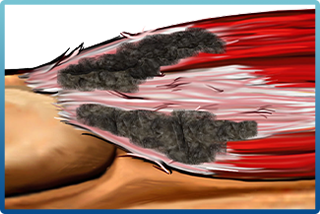
Diagrams and video courtesy of HydroCision, Inc.
Common Questions
Inner elbow pain can come from the tendon, the ulnar nerve, or both. Examination and ultrasound distinguish them, and the distinction changes the treatment substantially.
No. It is performed in an office or clinic setting under local anesthesia, which is one of the practical differences from open surgical treatment of the same condition.
Commonly a check at around two weeks, then a therapy program, with further review at intervals over the following months as loading is gradually increased.
Published cases report substantial improvement, and some report complete resolution โ but outcomes vary between patients and no procedure guarantees a pain-free result.
This information is general and is not medical advice. Whether any procedure is appropriate for you can only be determined by a physician who has examined you and reviewed your imaging.